Module 01 · 9 min
Free
Risk management: 1–2% vs 100%, the X:Y rule
Position sizing, reward-to-risk, and why a stop is never optional.
What you'll learn
- Conservative vs aggressive sizing
- Reward-to-risk 1:3 and 1:10
- Why stop-losses are non-negotiable
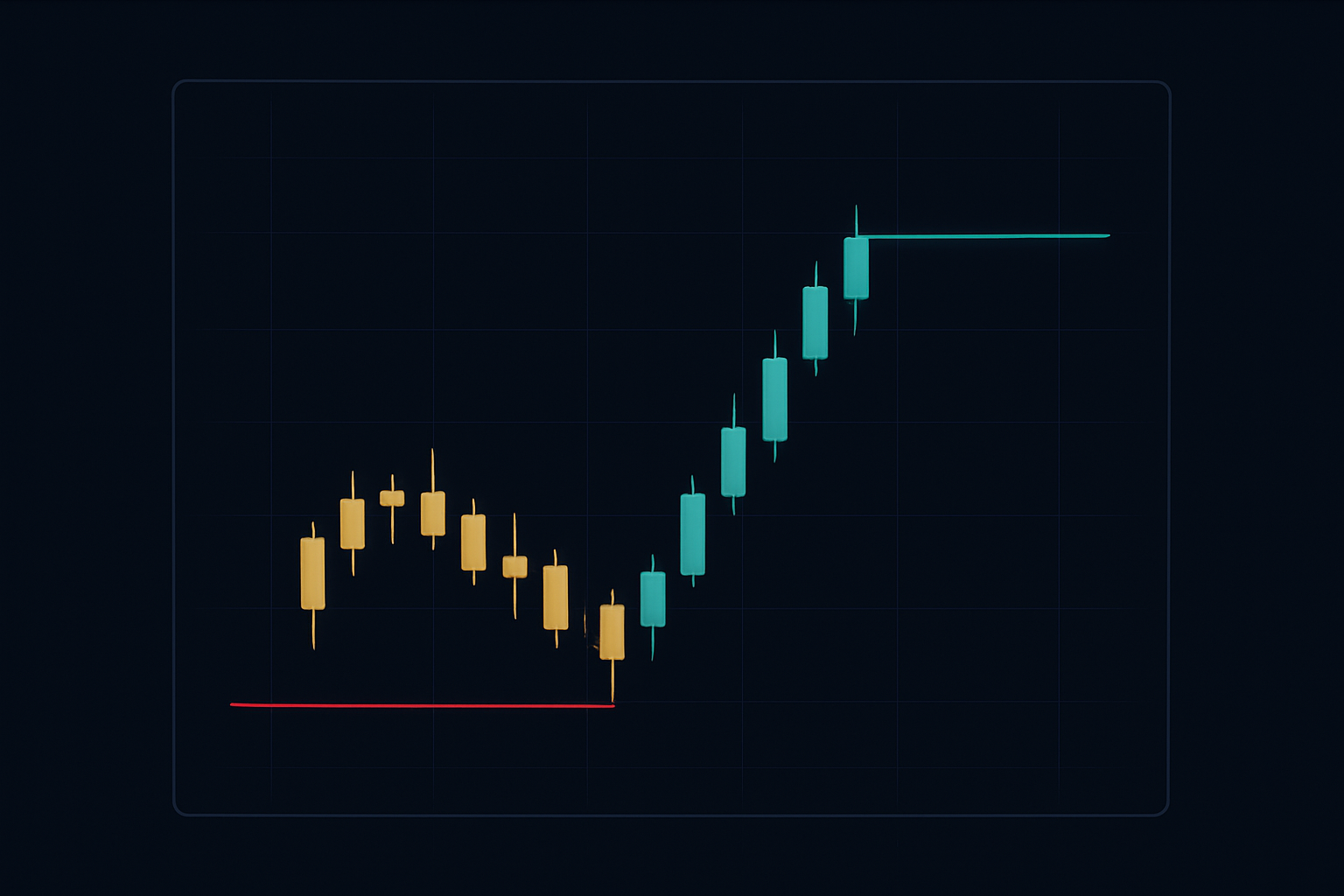
The deciding factor is not picking tops — it is risk control.
1–2% vs 100%
- Classic (1–2% per trade): low stress, survives losing streaks, slower growth.
- Aggressive (full deposit, tight 1–2% stop): faster growth, but high risk if the entry is wrong.
The X:Y principle
Size trades by reward-to-risk — 1:3 (classic) or 1:10 (tight stop, high target). If your stop risks $X, your target should aim for roughly $Y. A stop-loss order is never optional: losing a large share of the deposit in one session is how a disciplined trader becomes a statistic.
Quick check
GOGA Academy is educational content, not financial advice. Lessons may reference strategies, market data, or paper scenarios, but they do not promise profit and do not execute paper or live orders.